

What FoldedLogic Does
Hand-Coded Websites with Structure Behind the Surface
FoldedLogic is built for projects where the front end needs more than visual assembly. A page should look right, load quickly, adapt cleanly, support content, and remain understandable when future changes are needed.
The work centers on custom-coded implementation, responsive layout systems, technical SEO support, accessibility-minded structure, and maintainable CSS architecture. Instead of relying on bloated builder output or one-off page fixes, FoldedLogic uses deliberate front-end patterns that make each page easier to control, refine, and extend.
For designers, agencies, small businesses, nonprofits, advocates, educators, and service-based organizations, that means a bespoke website build that respects the design while giving the code a stronger foundation.
Core Services
Website Development for Cleaner, More Maintainable Builds
FoldedLogic services are shaped around clean implementation, responsive behavior, technical clarity, and long-term maintainability. Each service can stand alone or support a larger rebuild, redesign, or agency handoff.
Custom-Coded Websites and Front-End Builds
Custom web design and development for websites, landing pages, service pages, content sections, and website redesigns that need cleaner HTML, CSS, and JavaScript than a visual builder typically produces.
Designer Handoffs
Custom front end builds for finished layouts that need to become responsive, production-ready pages without losing spacing, hierarchy, proportion, or design intent.
Builder Replacement
Website rebuilds for sites that have become slow, fragile, difficult to edit, visually inconsistent, or too dependent on bulky visual-builder systems.
Responsive Implementation
Responsive web design for layouts that need to behave cleanly across large screens, standard desktops, tablets, and mobile devices without endless breakpoint patches.
Technical SEO Support
SEO-friendly website development for websites that need cleaner markup, logical page structure, stronger hierarchy, crawlable content, and front-end decisions that support search visibility.
Agency Support
Custom website development support for overflow work, landing pages, rebuilds, and front-end production tasks that need to be reliable, organized, and easy to hand off.
Custom-Coded Builds
Cleaner Website Development Without Builder Weight
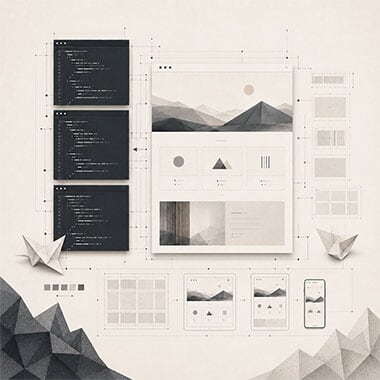
FoldedLogic builds front-end interfaces with an emphasis on semantic structure, responsive behavior, organized CSS, and performance-minded code. The goal is not only to recreate a design, but to translate it into a browser-ready system that holds together across real devices and screen widths.
This service is a strong fit when you have approved designs, a clear visual direction, or an existing page that needs to be rebuilt with better structure.
Pages are built around reusable patterns, controlled spacing, readable markup, and front-end decisions that make future edits less risky.


Designer Handoffs
Finished Designs Turned Into Responsive Pages
A good handoff is not just about matching a mockup, Figma layout, or PSD at one screen size. FoldedLogic focuses on how the design behaves between breakpoints, how content stacks, how spacing scales, and how visual rhythm is preserved when the browser changes.
The build process treats the design as a system, not a screenshot. Sections, containers, columns, panels, utilities, and shared values are used to keep the Figma-to-website and PSD-to-website implementation consistent while allowing each page to retain its intended character.
This is useful for Figma to HTML/CSS projects, PSD to HTML/CSS builds, designer partnerships, agency overflow, and projects where visual precision needs stronger front-end execution.

Builder Replacement
Website Rebuilds for Slow, Fragile, Builder-Dependent Sites
Many websites start with a builder because it feels flexible. Over time, the output can become difficult to manage: excessive wrappers, inconsistent spacing, plugin dependence, layout instability, weak performance, and code that becomes hard to repair without touching everything around it.
FoldedLogic rebuilds old and slow builder sites with a cleaner front-end structure. The goal is to preserve what works visually and strategically while replacing the fragile implementation underneath.
This is especially useful for slow pages, inconsistent layouts, repeated content sections, and websites that need stronger performance without losing their existing direction.
Responsive Behavior
Layouts That Are Planned, Not Patched
Responsive website design is not only about making a page fit on smaller screens. It is about preserving hierarchy, readability, spacing, and intent as the available space changes.
Controlled widths
Content is framed with consistent inner widths, max-widths, and spacing rules so pages do not become too wide, too cramped, or visually unstable.
Content-aware stacking
Columns, panels, images, and text groups are arranged so important content remains prominent as the layout moves from desktop to mobile.
Breakpoint discipline
Responsive rules are used with intention, reducing the need for long chains of emergency fixes across common screen ranges.
Browser-first behavior
The layout is shaped for real browser conditions, not just isolated desktop and mobile mockups that ignore the space between.
Technical Foundations
Built for Search, Structure, and Usability
SEO-friendly website structure and accessible web design both depend on how the page is built. FoldedLogic brings those concerns into the front-end process instead of treating them as final-pass corrections.
Technical SEO services
Heading structure, internal hierarchy, crawlable content, metadata awareness, image behavior, and clean markup help search engines better understand the page.
Accessibility-friendly website development
Semantic landmarks, logical heading order, readable content flow, form labels, keyboard-aware patterns, and clear link behavior are considered during implementation.
Website performance optimization
Page weight, image sizing, asset loading, CSS efficiency, and layout stability are considered as part of the build rather than postponed until after launch.
Maintainable implementation
Reusable classes, predictable spacing, organized CSS, and fewer one-off fixes make future edits less risky and easier to understand.
Process
How the Work Typically Moves
The service process is shaped around understanding the project, defining the layout structure, building the responsive front end, refining real browser behavior, and delivering code that can be maintained.
The starting point may be a design file, current website, content outline, page list, technical issue, or rebuild goal.
The page is broken into sections, containers, columns, panels, repeated patterns, and practical layout relationships before implementation begins.
The design or page direction is translated into browser-ready HTML, CSS, and JavaScript with responsive behavior built into the system.
Spacing, stacking, image behavior, headings, forms, and layout details are reviewed across realistic screen widths and content states.
The final build is organized so another developer, agency team, or future maintainer can understand the structure more easily.
The goal is not only to finish a page, but to leave behind a front-end foundation that is easier to extend after launch.
Where To Begin
Start With the Page, the Problem, or the Design
Whether you are starting from a finished design, improving an existing website, replacing builder output, or planning a more structured front-end rebuild, FoldedLogic can help shape the implementation around the actual needs of the project.
Helpful starting points include a design file, current website URL, page list, content outline, technical concerns, project goals, or notes about what is not working in the current build.